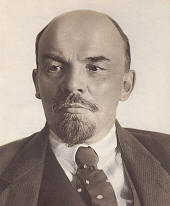
Poor old Lenin

bolshe6
One of side effects of the scandal currently engulfing the SWP is that it seems to have stimulated a rash of debates about the nature and relevance of ‘Leninism’. In particular, the SWP’s Central Committee and its supporters portray its opponents within the party as opponents of Bolshevism, or democratic centralism, its organisational model, or, most damningly, of Leninism. While for most people in the real world, or even in those distant suburbs of the real world which much of the Left inhabit, such accusations seem as comprehensible (and as relevant) as charges of, say, Triclavianism by Pope Innocent the 3rd, they represent an ever present danger to the health of the socialist movement. They are dangerous because they are symptoms of the very common tendency on the left to fetishise the political theory and/or practice of various great leaders and turn their every utterance into holy writ and to regard any criticism as unforgivable heresy. This tendency is nowhere more evident than in the case of Lenin.

Of course, it is also the case that when it comes to poor old Lenin, the reverse is also true. While few would deny that Lenin was a hugely important figure, there is a wide spread and long-standing body of opinion, made up of social democrats of various types, disgruntled revolutionaries, various sub species of anarchists and right wing academics, who would claim that he was a thoroughly Bad Thing. For them, there is a thread of malignancy that spread from his politics, his theoretical work and his models of organisation, through the Bolshevik Party to its fully mestastasised form in the horror of Stalinism.

For such people, one can only repeat the words of the great Victor Serge: “It is often said that ‘the germ of all Stalinism was in Bolshevism at its beginning’. Well, I have no objection. Only, Bolshevism also contained many other germs, a mass of other germs, and those who lived through the enthusiasm of the first years of the first victorious socialist revolution ought not to forget it. To judge the living man by the death germs which the autopsy reveals in the corpse – and which he may have carried in him since his birth – is that very sensible?”

However, the curious thing about a great many of the self styled ‘Leninists’ that I know are that they are no such thing, but rather people who cling to a rather dog eared snapshot of Leninism that bears little or no relationship to the historical reality of a set of organisational principles that Lenin laid down in 1902 but subsequently modified drastically in 1905 and again in 1917. The Lenin of the awful What Is To Be Done? and the Lenin of State and Revolution are the same man, but the politics are very different. However, to the hagiographers of most of the far left sects, they are revealed truth.

That was not the case as far as Lenin himself was concerned. While, in 1902, when he published What Is To Be Done? his view was “The history of all countries shows that the working class, exclusively by its own efforts, is able to develop only trade-union consciousness,” and that it was necessary to develop a vanguard party of professional revolutionaries to bring “class political consciousness” from outside the economic struggle, his view was profoundly flawed in a number of ways, he was writing about a particular problem – the fight against economism – in a particular historical context.

But as the situation changed, his position did too, several times. For example, in 1904 he emphasised that his organisational views were not universally applicable: “Under free political conditions our party can and will be built up entirely upon the principle of electability. Under absolutism this is unrealisable.” While in 1902 Lenin wrote that the workers through their own efforts could only reach trade union consciousness, by 1905, in the light of the Petrograd Soviet, he wrote, “The working class is instinctively, spontaneously Social Democratic”. By 1921, he was unhappy with the proposed translation of What Is To Be Done? into non-Russian languages because of the its capacity to be unthinkingly misused. He said, “that is not desirable; the translation must at least be issued with good commentaries which would have to be written by a Russian comrade very well acquainted with the history of the Communist Party of Russia in order to avoid false application”.

Just to be clear, in the debates between Lenin and Rosa Luxemburg on the nature of the party and socialist democracy I think that Rosa was largely right and Lenin largely wrong. And, to quote Tony Cliff (before he discovered that he was a reincarnation of old Vladimir Illyich) “For Marxists in advanced industrial countries, Lenin’s original position can much less serve as a guide than Rosa Luxemburg’s.” However, the point is, to paraphrase Jim Higgins, that the Leninism of 1917 was addressing problems that have not existed for almost a century, and are of little help to revolutionary socialists in 2013. The Leninism of the 1930s, which we call Trotskyism, offers us the same thing only written very, very small.

Lenin argued for the necessity of a revolutionary party ‘of a new kind’. Indeed, but the world has moved on and it is time leave the old heroes (or villains if you prefer) behind, and build parties of an even newer kind, with new strategies and perspectives for the 21st century. To quote Jim, properly this time “It is past time for Lenin to vacate the mausoleum and be finally laid to rest, alongside his mother, where he always wanted to be. Let him rest in peace.”


Posted in General grumpiness, History, Lenin, Socialism, Theory | Tagged | 2 Comments

Margaret Barry

http://www.youtube.com/watch?v=TudS48gNWOc

Margaret Barry was born in Cork City in 1917, around a quarter of a mile from where my mum lived. She was from a traveller family and both her parents were street musicians. When she was fifteen she  slung her banjo on her back, got on her bike and left home to become an itinerant street singer, singing at matches and fairs.

She moved to London in the early 1950s and became a regular performer in the Irish pubs in Camden Town and Holloway. She had a huge gutsy voice and a reputation of being someone you didn’t mess with (it was claimed that she had won a Guinness drinking competition with Brendan Behan in the mid fifties) but when I first met her, at a folk club in Guildford in the early sixties, I found her to be a rather gentle and slightly shy person – although I wouldn’t have had the nerve to heckle her!

Her voice brings back to me memories of sing-songs at my grandma’s house and Mrs Cleary’s pub in Cork and of sessions in the Irish pubs of Camden Town, like the Bedford, the Laurel Tree and the Red Cap – all gone now, like the labouring men for whom they were a refuge and a reminder of home.

Posted on by Sean Thompson | Leave a comment

More in sorrow than in anger

Marx famously wrote ‘History repeats itself, first as tragedy, second as farce.’ In the case of the ongoing implosion of the Socialist Workers Party, the quote should be reversed. The collapse and fragmentation of the Workers Revolutionary Party in 1985 was also triggered by the exposure of dreadful sexual misdeeds – in that case by the ghastly Gerry Healy – but by then the WRP had become a tiny and totally marginalised parody of itself and the whole affair was farcical (except for the women bullied and raped by Healy of course). What appears to be the beginning of a slow motion collapse of the SWP is tragic though.

What began as a botched and thoroughly misjudged response by the SWP’s Central Committee to the complaint by a young female party member that she had been raped by a leading member of the self-same CC has escalated to a major challenge, not just to the unquestioning obedience expected of members and the party’s internal culture of bullying, but also to it’s practice of a peculiarly undemocratic form of democratic centralism and resistance to honest and open political debate. The opposition within the party is unprecedentedly large and public. At the current count, at least a dozen Socialist Worker Student Society groups have made public calls for a special conference and fifteen party branches have demanded a recall conference or passed resolutions condemning the CC.

The CC has responded essentially by claiming apostolic succession to Lenin and the organisational model of the Bolsheviks in 1917. In reality, the Bolshevik Party in 1917 was a vastly more democratic organisation than the SWP today – in vastly more difficult circumstances. It claims to uphold ‘the IS tradition’ but that tradition is the very antithesis of the dishonest and opportunist practice of the current SWP.

In 1971, Duncan Hallas, a then leading member of the International Socialists, the forerunner of the SWP, wrote of how revolutionary socialist parties should behave: ‘Such a party cannot possibly be created except on a thoroughly democratic basis; unless, in its internal life, vigorous controversy is the rule and various tendencies and shades of opinion are represented, a socialist party cannot rise above the level of a sect. Internal democracy is not an optional extra. It is fundamental to the relationship between party members and those amongst whom they work.’ How dare the current leadership of the SWP claim to be the defenders of that tradition

No matter what one’s criticisms of the SWP may be (and I, along with the other surviving members of the IS Opposition of getting on for forty years ago, can justifiably claim first place in the queue when it comes to critics) the fact remains that it is the largest group of revolutionary socialists in Britain – certainly as big as all the others combined. No attempt to  build any sort of united left capable of establishing even the most modest popular base can ignore it, and an SWP cleansed of the bureaucratic centralism and opportunism that have characterised it for so long would be a massive asset to the Left. A messy and extended demise, with the spectacle of hundreds of committed socialists just drifting away from organised activity, the feeding frenzy of the circling micro sects looking for political carrion and the gloating chuckles of the right wing commentariat, would be a truly tragic setback for the cause of socialism in Britain. 

 No matter what our historical grievances with the SWP may be, I think that just now we should be setting them aside and wishing those comrades within the SWP who are beginning to demand democracy, honesty and respect within the organisation good luck with their efforts – because their success is in all our interests.

I really hope that this isn’t an issue to which I will feel any need to return – but I really fear that I will be forced to.


Posted in Democracy, Left regroupment, Socialism | Tagged , , | 1 Comment

A small victory for our woodlands – and for innovative campaigning

Forest

As a retired furniture maker (though I’m still happy to take on commissions, I’m very good value, parties catered for) one might be forgiven for thinking that my interest in trees begins only when they are sawn into boards and stacked up in timber yards. However, as it happens I’m a passionate lover of trees while they are alive too – and quite knowledgeable about them; the only Latin words I know are the names of European trees and the more common tropical hardwoods. So I was delighted yesterday when the Environment Secretary, Owen Paterson, more or less agreed with all the main recommendations of the Independent Panel on Forestry’s report on the future of our woodlands.

The Panel, and its report, came about after the previous Environment Secretary, Caroline Spelman was forced to back down in the face of tumultuous opposition to her plans to sell off most of Britain’s publicly owned forests. While the Panel, and the Government, responded positively to the sensible and soundly based proposals of organisations such as the Woodland Trust and the National Trust, the reality is that the Government didn’t change its mind as a result of measured argument by experts in the field,but as a result of the realisation that they had stirred up an unprecedented hornet’s nest of public outrage. But, and this is the thing, that outrage was focussed and organised a new way, making use of new forms of near instantaneous mass communication.

In late 2010 the Tories announced a plan to introduce a new law to allow all publicly owned woodlands to be sold off in the future. They probably expected a few predictable protests from environmental pressure groups and charities like the Woodland Trust – what they did not expect was that the internet based campaign group would attract 538,107 people to sign its petition opposing the plans within a week of it being launched. 220,00 people spread the word on Twitter and Facebook and more than 100,000 contacted their MPs within a fortnight or so. 38 Degrees also managed to crowd source over £60,000 within days to place adverts in the national press – the ‘old’ media. In the face of this sudden eruption the Government panicked and Spelman backed down, seeking to kick the issue into the undergrowth by announcing the establishment of an ‘Independent Panel on Forestry’ to look into it. However, 38 Degrees, again using its internet based organising capacity, got over 34,000 people to write to the Panel and again crowd sourced funding to enable it to commission an independent poll, which showed 84% in favour of retaining our forests in public hands.

Obviously, the startling success of this campaign in mobilising overwhelming public support – and thoroughly rattling the Tories in the process, can’t be simply or mechanically replicated in the case of other campaigns. Nonetheless, it does demonstrate two things. First, that despite the pessimism of some on the left, it is possible to raise awareness and consciousness very rapidly – almost from out of nowhere – and to mobilise that popular consciousness in very focussed ways. Second, that the internet and social networks are potentially very powerful tools for organising popular resistance – and of course this has more recently been demonstrated more dramatically in Egypt.

Of course, regardless of the potential of social networks to trigger and enable sudden surges of popular opposition, such spontaneous uprisings – from the Paris Commun to the May Events from Tahrir Square to Occupy – are impossible to predict.However, the events of the last couple of years have also shown that the ideological and cultural hegemony usually excercised so effectively by the ruling class through the mass media can now be dramatically shaken, if only momentarily, by bunches of kids with iPhones. When those kids realise that their interests are those of working people who are everywhere being screwed – the 99% – anything might be possible.

And in the meantime, the Tories got a fright and we have still got our woodlands.

Posted in Environment, Internet, Wood | Tagged , , , | Leave a comment

Shock news from the trenches

756

There’s class warfare, all right, but it’s my class, the rich class, that’s making war, and we’re winning.

Warren Buffet

Posted in Uncategorized | Tagged , , | Leave a comment

Are there no prisons? Are there no workhouses?

Look, I don’t want to seem like a bitter and negative old git – indeed, I’m noted for my positive outlook and sunny disposition. So I don’t want to have to endlessly write denunciations of this Tory Government and its Lib Dem bag carriers; we all know they are utter bastards the lot of them, and that should be that.

However, this week I have undertaken a welfare rights course organised by Unite for some of its Community Membership activists in London and I have become aware, in intimate detail, of the sheer maliciousness of the attacks that have been made on disabled and unemployed people so far and the appalling scale of the attacks on them and the working poor that are going to occur in the coming year.

First, from April in most areas, everyone currently receiving full relief from Council Tax (except pensioners) will have to start paying some. My borough, Camden, is like many going for the maximum charge that it can while still being eligible for government transitional funding – 8.5% (it is also reducing the limit of allowable savings from £16,000 to £5,000). That means that some 13,100 local people, who currently do not have to pay Council Tax, will have to pay, on average, £2.69 a week from April. Another 3,700 already pay part of their Council tax and will have to pay extra. Now, two or three quid a week doesn’t sound very much, and it isn’t. Except for three things.

First, as the report recommending the new charges to councillors drily remarks of the people to be charged; ‘The fact that they are claiming Council Tax Benefit means that many of them will view themselves as financially vulnerable.’ So disabled people living on £105 a week, or unemployed people living on £71 (or £56.25 for under 25 year olds) might consider themselves ‘financially vulnerable’? Gosh, that’s a shocker. So yes, two or three quid a week is a lot when you have to live on £71.

Second, that’s only the beginning for some people. From April, council tenants will be hit by new regulations determining how much space they are entitled to. For example, a single mother with three children, a boy aged 9 and two girls aged 8 and 16, will be entitled to a three bedroom flat or house (one bedroom for her, one for her 8year old daughter and nine year old son and one for her 16 year old). From April, If she has the temerity to be living in a four bedroom house she will have her Housing Benefit cut by 14%, costing her between £12 and £18 a week. A couple who have been living in a three bedroom house for thirty years and whose two children have moved away from home, like my neighbours up the street, will have their Housing Benefit cut by 25%, or around £30 a week.

Then there is the Benefits Cap, which will be rolled out progressively across the country from April. This will see the total benefits paid to any family limited to £500 a week and to any individual to £350 a week. This will force the mass evacuation of poor people, including many who are in work, from most of Greater London and will cause incalculable social damage and distress throughout the country. And looming above it all is Ian Duncan Smiths’s big idea, Universal Benefit, which will start to be rolled out (if they can ever sort the details out) in the Autumn and which promises to plunge even more people into penury.

So I’m sorry if I seem disrespectful and less than charitable about Her Majesty’s Government, but Nye Bevan was right about the Tories – they are lower than vermin.

Posted in Cuts, Politics | Tagged , , , | Leave a comment

Tony Benn on democracy

If you meet a powerful person – ask them five questions:
What power have you got?
Where did you get it from?
In whose interests do you exercise it?
To whom are you accountable?
And how can we get rid of you?
If you cannot get rid of the people who govern you, you do not live in a democratic system.

Tony Benn

A famous actress – Yvonne Arnaud I think – once described herself as a socialist ‘or in other words, an extreme democrat.’ It seems to me that this quote from Tony Benn, which I have on the wall at Thompson Towers, sums up up the spirit of socialist democracy.

Posted in Democracy, Quotes, Socialism | Tagged , , , | Leave a comment

Surf’s up!

I was prompted to start this blog as a result of going on a march in Lewisham last Saturday in defence of the local hospital. It’s threatened with cuts as a result of an insane piece of accountant’s logic on the part of the bureaucrat charged with sorting out the chaos in other hospitals in South East London caused by scandalous (and on-going) rip-off PFI deals entered into by the previous NuLab government.

The day was sunny and relatively mild and the march was large (twenty five thousand or so), cheerful and full of the sort of creativity that one finds only in genuinely popular protests. Even my arthritic old bones were warmed by the occasion and as we walked it occurred to me that I might be seeing the first small wave of what might well be a rising tide of protest over the next year or two.

The campaign against the stealthy privatisation of the NHS and the huge cuts in its funding has found it difficult to achieve any real resonance in popular consciousness over the past two years, despite the general suspicion of the Tories’ intentions towards the Health Service and the widespread – but unfocussed – popular opposition to their cuts agenda. In large measure this has been because of a) moderately successful smokescreen tactics by the Tories’ PR hacks and their quislings in the NHS, and b) the sheer size and complexity of both the NHS and the Government’s plans for it’s dismemberment and disposal has made the whole thing difficult for people to grasp in concrete detail.

However, now the concrete detail is beginning to come to get them. Until very recently, the coming consequences of the cuts and privatisation were to some extent abstract and generalised as far as most people were concerned. But now those consequences are becoming increasingly concrete and becoming increasingly experienced by growing numbers of ordinary people. As this process speeds up (only two days before the Lewisham demo, our local paper discovered the plans of the apparatchiks of my nearest hospital, the Wittington, to sell off half its buildings) then there is a likelihood that faced with cuts to their GP’s services, complete or partial closure of their local hospital and increasingly savage reductions in services, people’s profound support for the NHS and generalised opposition to the Tories’ plans for it will focus on the concrete cuts in their neighbourhoods. When or if that happens, the sort of demonstration we saw in Lewisham last Saturday will be replicated in communities all over the country. Those small waves could grow and combine into a tsunami of popular opposition, but if it is not to subside again as quickly as it rises, socialists have to learn how to surf the wave. 

I’m afraid that the analogy sort of breaks down at that point, but you catch my drift I hope. Oh, and of course, the NHS isn’t the only area in which we can expect the potential for real popular opposition to manifest itself in the coming months. While isn’t possible to predict exactly where real battles might break out (although I would lay good money that a really popular campaign in defence of the Fire Service will emerge in London over the next three months or so), as the effects of the Government’s malicious cuts to both welfare and social provision start to really be felt by working people from the Spring onwards, popular opposition is bound to grow. Obviously, whether it grows fast enough, large enough and militant enough is another matter, but that is something that socialists can play at least some part in.

Stop the Sell-off and Cuts at the Whittington Hospital Petition | GoPetition

Posted in Politics | Tagged , , , | Leave a comment